Frequently Asked
Pilates, answered.
These Pilates FAQs explain SCULPT’s approach to movement with clarity and calm, answering common questions about reformer work, private sessions, beginners, consistency, and the role Pilates can play in a more refined wellness life.
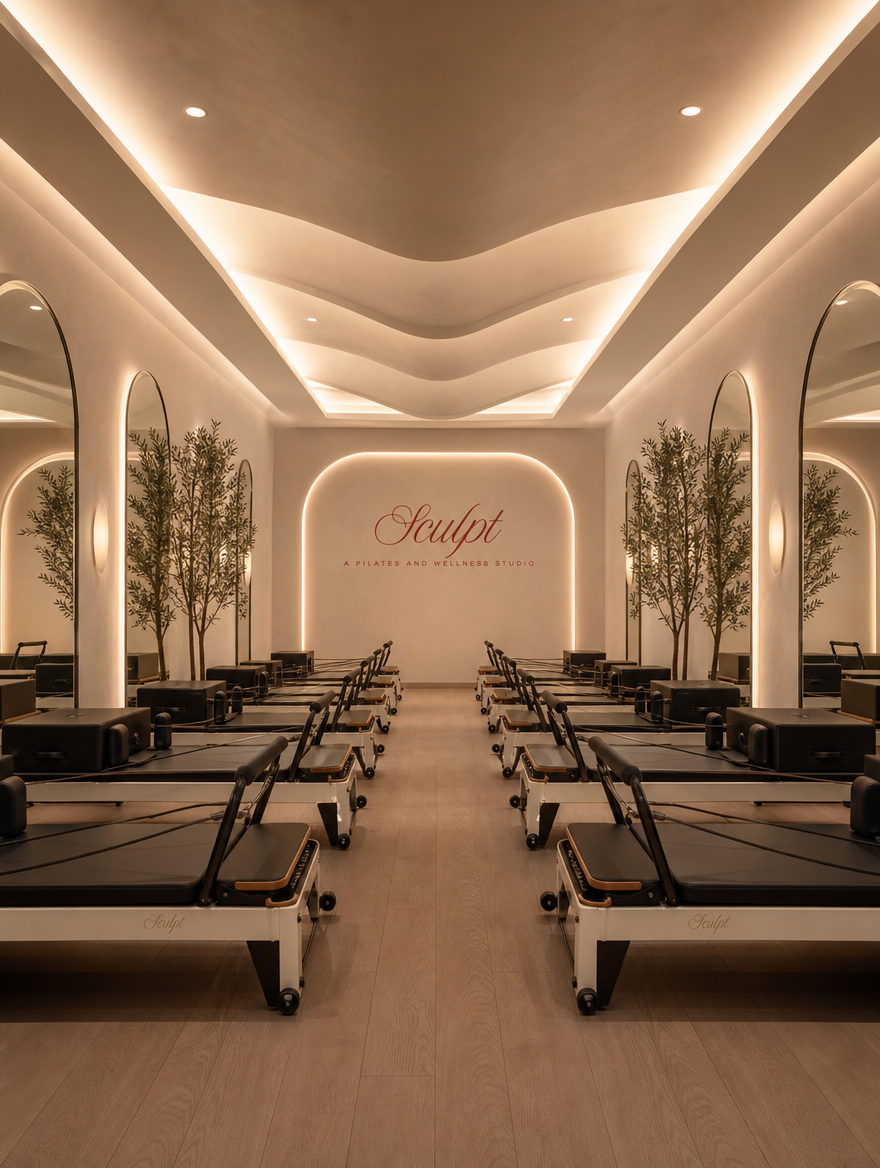
SCULPT’s Pilates practice is reformer-led and hospitality-inspired, with an emphasis on precision, private guidance, and long-term quality of movement. The work is designed to feel elevated, calm, and deeply considered rather than fast or performative.
Yes. Beginners are welcomed with care and thoughtful instruction. The club’s approach favors clarity, pace, and individual support so a new practitioner can learn without feeling rushed or observed.
Private Pilates allows the work to be shaped around one body rather than around the speed of a room. The instruction can be more precise, the pacing more responsive, and the overall experience more personal.
No. Many women begin at SCULPT with no prior reformer experience. The setting is intentionally designed so first sessions feel informed, welcoming, and unhurried.
Good movement at SCULPT is not measured by spectacle or intensity. It is measured by quality, alignment, awareness, breath, control, and the body’s ability to move with more ease over time.
Yes, though strength is approached with nuance and refinement rather than aggression. Reformer work can build meaningful strength while also supporting posture, coordination, and control.
Very often, yes. Thoughtful Pilates work can help the body move with more range and more intelligence, especially when the instruction is attentive and the environment supports consistency.
Not in the way many fitness environments define intensity. The work can be physically demanding, but it is designed to feel focused, precise, and deeply intentional rather than loud or exhausting for its own sake.
A well-designed studio changes how a person experiences movement. Light, acoustics, spacing, and visual calm all influence attention, breath, and the willingness to stay present in the body.
Yes. Many women practice Pilates because it supports posture, control, mobility, and a more connected relationship to the body over time. In that sense, it can be an important part of a longevity-oriented wellness life.
That feeling is common, especially in more public or performance-driven settings. SCULPT approaches Pilates in a calmer, more private way so the work feels invitational rather than intimidating.
The right rhythm depends on the individual, but consistency matters more than intensity. Even a measured, regular practice often creates more lasting change than occasional bursts of effort.
Yes. The practice is designed to meet women across different physical seasons, including times when gentleness, strength, mobility, or support need to be prioritized differently.
Very well. Pilates and recovery are complementary, which is one reason they sit so naturally together inside the SCULPT club model. Movement becomes more sustainable when restoration is built in.
A Private Preview is the most natural beginning. It allows you to understand the studio, the atmosphere, and the philosophy before deciding how you would like to practice.
Continue