Guide
Pilates, explained with the care it deserves.
A precise, unhurried, beginner-friendly introduction to the practice, written from the private studios of SCULPT.
In This Guide
- 01Why This Guide Exists
- 02What Pilates Actually Is
- 03What The Reformer Does
- 04Why Beginners Are Often The Best Pilates Students
- 05How A First Private Session Is Structured
- 06What You Will Be Asked To Learn
- 07What You Will Feel
- 08Why Private Instruction Matters Most For Beginners
- 09How Often To Begin
- 10Common Beginner Misconceptions
- 11What SCULPT's Beginner Program Includes
- 12Closing Thought
Why This Guide Exists
Most beginner's guides to Pilates arrive in the world wrapped in gym marketing language. They tell the new student what to wear, what to expect, how many calories she might burn. They reduce a serious practice to an entry-level checklist. SCULPT's beginner's guide is different. It is written from inside an invitation-only private wellness club, by instructors whose craft is the practice itself, for women who are arriving curious, cautious, or simply tired of feeling like wellness is something done to them rather than with them. This guide is offered as a steady companion to your first weeks of practice, so that when you step onto a reformer at SCULPT for the first time, you arrive already informed by the room.
What Pilates Actually Is
Pilates is a system of movement developed by Joseph Pilates in the early twentieth century as a method to build strength, mobility, and coordination from the center of the body outward. The principles of Pilates — centering, concentration, control, precision, breath, and flow — are the framework around which every exercise is constructed. A common misunderstanding is that Pilates is essentially a stretching routine. In reality, Pilates is a resistance-based, core-organized, breath-paced system of strength work. The apparatus (the reformer, the chair, the cadillac, the barrel, the mat) provides targeted resistance, organized feedback, and a structure within which the practitioner can refine motor patterns, build proprioceptive awareness, and improve structural alignment without the joint compression many fitness modalities impose.
What The Reformer Does
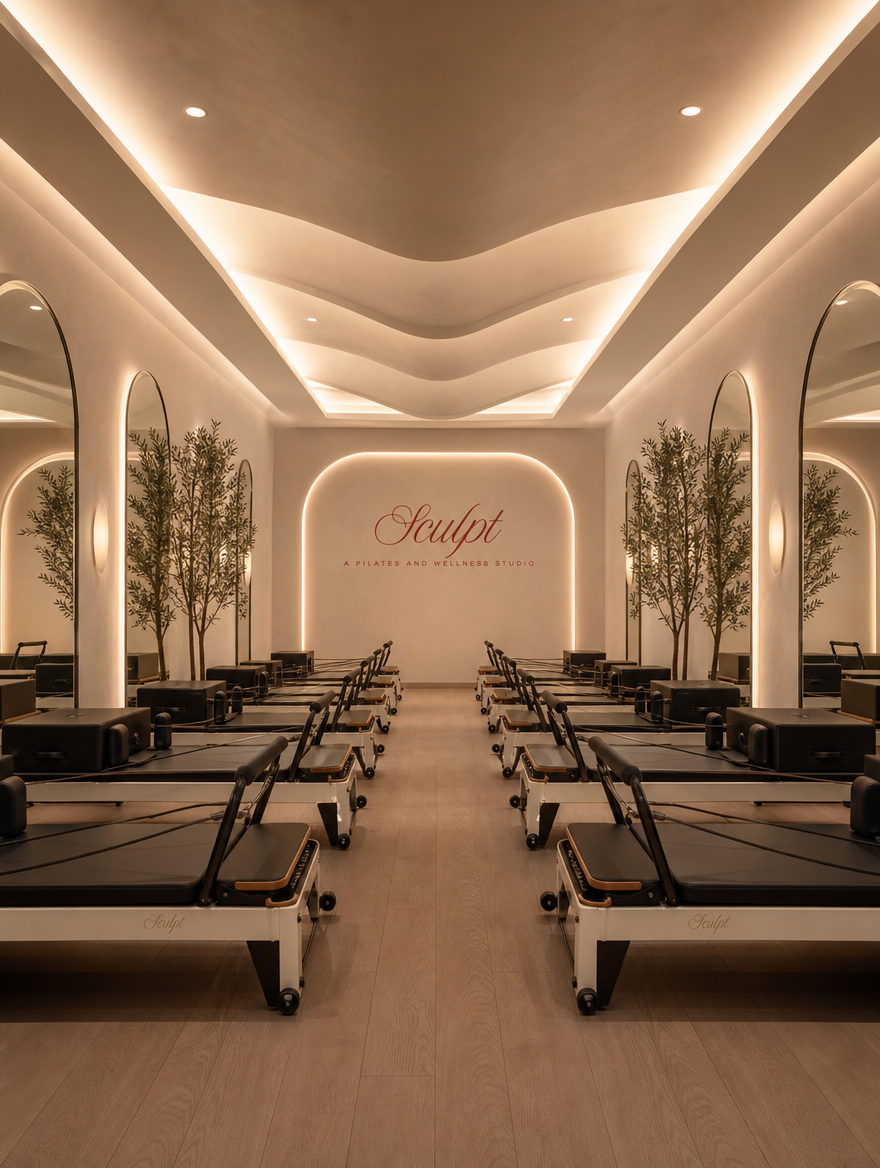
The reformer is the most recognized piece of Pilates apparatus. It consists of a moving carriage, a stationary frame, a system of springs offering varied resistance, and a series of attachments that allow the practitioner to perform dozens of different exercises from supine, seated, kneeling, prone, and standing positions. The springs provide both assistance and resistance, which means the reformer can be calibrated to a beginner's body and to an experienced practitioner's body in the same room, in the same session, simply by changing spring load. This is one reason reformer Pilates scales so gracefully across ages, body types, and fitness levels.
Why Beginners Are Often The Best Pilates Students
A surprising number of the most rewarding sessions at SCULPT have been with women who arrived having never touched a reformer. They have arrived without preconceptions of how movement must look, without the habit of comparing their body to others, and with a willingness to learn rather than perform. The principles of Pilates make particular sense to a beginner because the body has not yet been trained otherwise. The instructor and the apparatus do much of the early teaching. The work unfolds.
How A First Private Session Is Structured
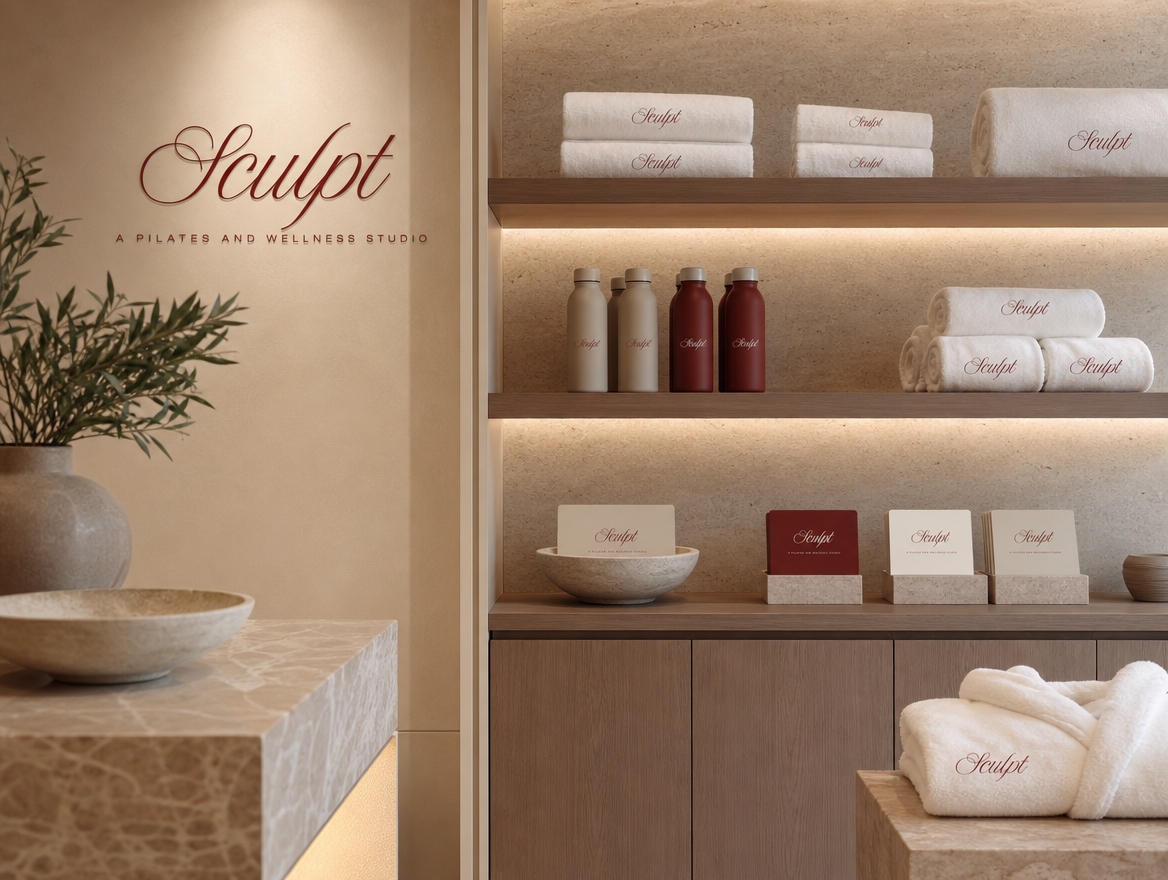
At SCULPT, the first session of a beginner's practice is structured as a private session by default. You will be welcomed through reception and offered tea or mineral water. Your instructor will introduce herself by name. The session will begin with a conversation rather than choreography — your history with movement, your current intentions, any old injuries, the kind of week you are arriving with. The reformer will be set for your body. The first practice will be designed around your conversation. You will be guided through breath, through alignment, through the foundational repertoire, and through a calm exit. Most beginners leave their first session with two clear impressions: the room was more beautiful than they expected, and the work was more substantive than they expected.
What You Will Be Asked To Learn
In the first weeks of practice, you will be asked to learn five things. First, breath — coordinated deep breathing integrated into the movement. Second, the neutral pelvis and the neutral spine — the home base from which all Pilates movement begins. Third, the deep core engagement pattern of the lower abdominals, the pelvic floor, and the lower back working in concert. Fourth, shoulder organization — the drawing of the shoulder blades down and back, the opening of the chest, the elongation of the neck. Fifth, the slow return of the body's proprioceptive awareness. None of these are rushed. None of these are graded. They are placed carefully, session by session, until they become a felt sense.
What You Will Feel
You will likely feel a quiet kind of work. Pilates is not a high-impact practice. It is not a sweating practice. It is a focused, integrated practice. You may feel muscles you did not know existed engaging. You may feel your shoulders drop a quarter inch by the second set. You may feel your breath begin to deepen without being told. You may feel a small, surprisingly pleasant fatigue through the center of your body. By the second session, you will likely begin to recognize some of the work. By the fourth session, you will likely feel the practice starting to organize the rest of your week.
Why Private Instruction Matters Most For Beginners
Private instruction allows the beginner to learn the practice correctly from the first session. The instructor positions the body, sets the spring load, observes the asymmetries, adjusts the breath pattern, and shapes the rehearsal so that the work does not harden into poor habits. Group classes can offer a beginner a taste of the work, but the taste happens at the speed of the room, not the speed of the body. Private instruction is where the foundational patterns are built, and the patterns are the legacy of the practice.
How Often To Begin
For a beginner, two private sessions per week for the first four weeks is a considered cadence. It allows the foundational patterns to be laid down and reinforced without overwhelming the body. After the first month, the cadence often shifts to two or three sessions per week, alternating between private sessions and small-group reformer sessions taught at a level the body is now ready for. Within eight to twelve weeks, most beginners feel that the practice is beginning to organize how they stand, walk, breathe, sit, and sleep.
Common Beginner Misconceptions
- "Pilates is just stretching." It is not. Pilates is a strength and motor-control practice built around the center.
- "I'll be the worst person in the room." At SCULPT, the room is private. There is no audience. There is only the practice.
- "It will take a year before I feel anything." Most beginners feel a meaningful shift by the second session. By the fourth session, the shifts begin to organize the body.
- "I am too old, too stiff, or too injured." The reformer is calibrated for every body. The instructor adapts. The work is shaped around the body that arrives.
What SCULPT's Beginner Program Includes
- A foundational Beginners Pilates program of private sessions
- Private Pilates sessions bridging to small-group reformer work
- Pilates for Strength once the foundation is established
- Pilates for Mobility work for joint health
- Pilates for Back Pain for any woman wanting back-aware practice
- An instructor who knows your body across sessions
Closing Thought
Beginning Pilates at SCULPT is an unhurried, precise, and surprisingly emotional experience. It is the act of returning to one's body in a room that knows how to hold that return. If you are curious whether this practice is right for you, we welcome you to begin with a Private Preview at the club, followed by a Membership Consultation at your own pace.
Questions
The Complete Beginner's Guide to Pilates, answered.
No. Pilates is designed to help you arrive in better shape. The reformer is calibrated for your body on the day you arrive.
At SCULPT, your first sessions will be private. You may also join a small-group reformer session once your instructor confirms your foundation.
Comfortable clothing you can move in. Athletic wear is welcome. The studio is apparel-agnostic; what matters is that you feel at ease.
Most beginners feel a meaningful shift in body awareness by the second session. A structural shift in shape, breath, and posture begins across the first month.
More Guides
Further reading, in the SCULPT voice.
Come see the club in person.
Founding Membership is open to the first 100 women who join before opening. A private preview is where the conversation begins.